
Glass Edge Work
Glass Edge Work
Reno Go
Glass Edge Work
Glass Edge Work refers to the process of finishing, smoothing, and polishing the edges of glass panels after cutting. Proper edge processing improves safety, durability, and visual appearance, making the glass suitable for architectural, commercial, and interior applications.
Common Types of Glass Edge Finishes
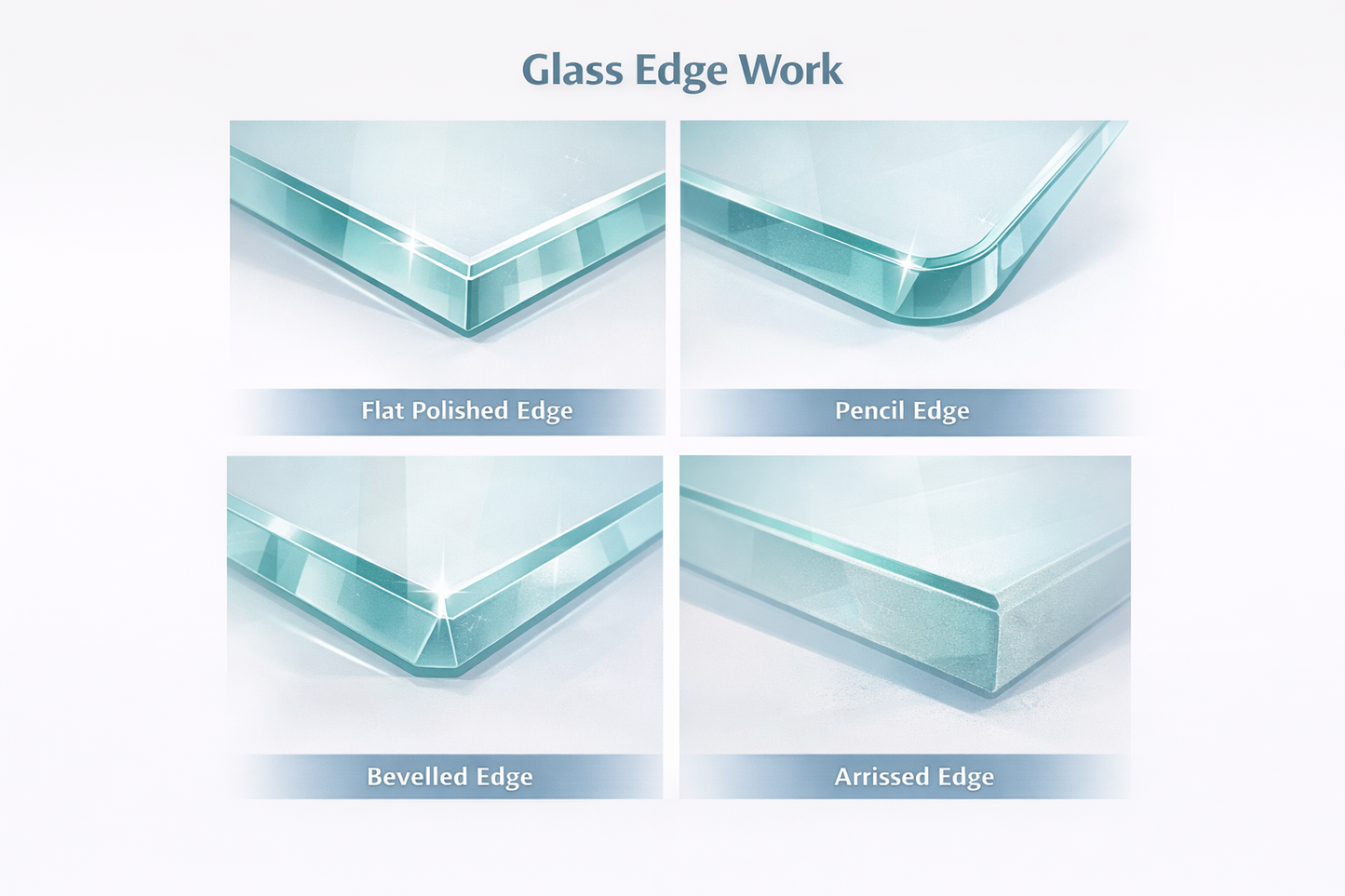
1. Flat Polished Edge
One of the most popular finishes. The glass edge is ground flat and polished, creating a smooth, shiny surface. This edge is commonly used for glass balustrades, shower screens, tabletops, and frameless glass panels.
2. Pencil Edge (Round Edge)
The edge is slightly rounded and polished to create a soft curved profile. Pencil edges are frequently used for tabletops, shelves, and decorative glass furniture.
3. Bevelled Edge
The glass edge is cut at an angled slope (usually 10–45 mm wide) and polished to create a decorative finish. Bevelled edges are popular for mirrors, decorative panels, and feature glass.
4. Arrissed Edge (Safety Edge)
A light sanding removes sharp edges without full polishing. This is typically used for glass that will be framed, where the edge is not visible.
Benefits of Glass Edge Work
✔ Improves safety by removing sharp edges
✔ Enhances the aesthetic appearance of glass
✔ Reduces the risk of cracking and chipping
✔ Prepares glass for toughening or lamination
Applications
Glass edge processing is commonly used in:
-
Shower screens
-
Glass balustrades
-
Glass shelving
-
Table tops
-
Frameless doors
-
Mirrors and decorative panels
High-quality edge work ensures the glass meets modern architectural standards and safety requirements, particularly for residential and commercial glazing projects.
Couldn't load pickup availability